Ongoing Projects
Centralized Transactional Memory Scheduling
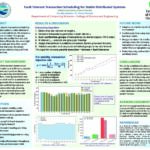
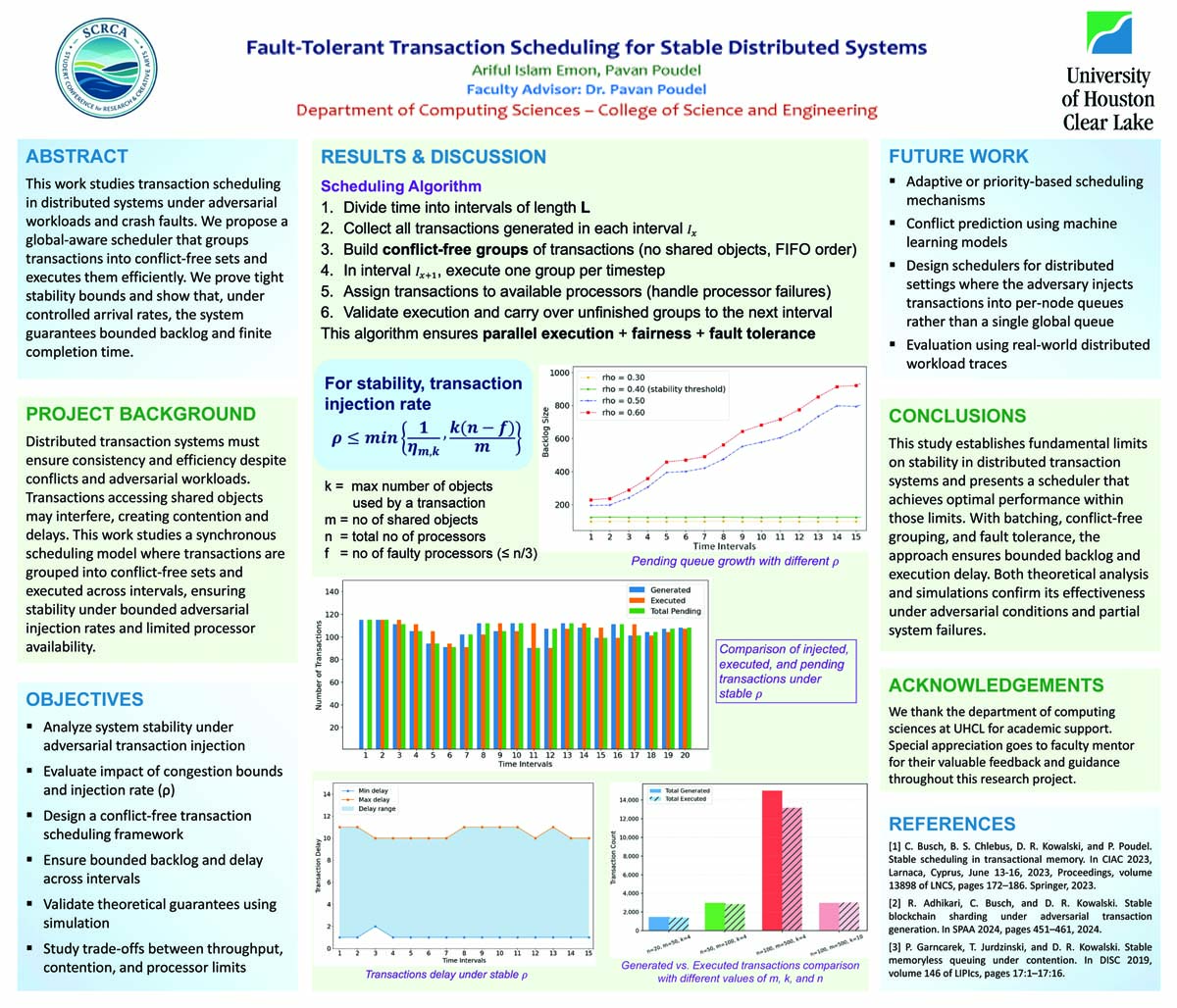
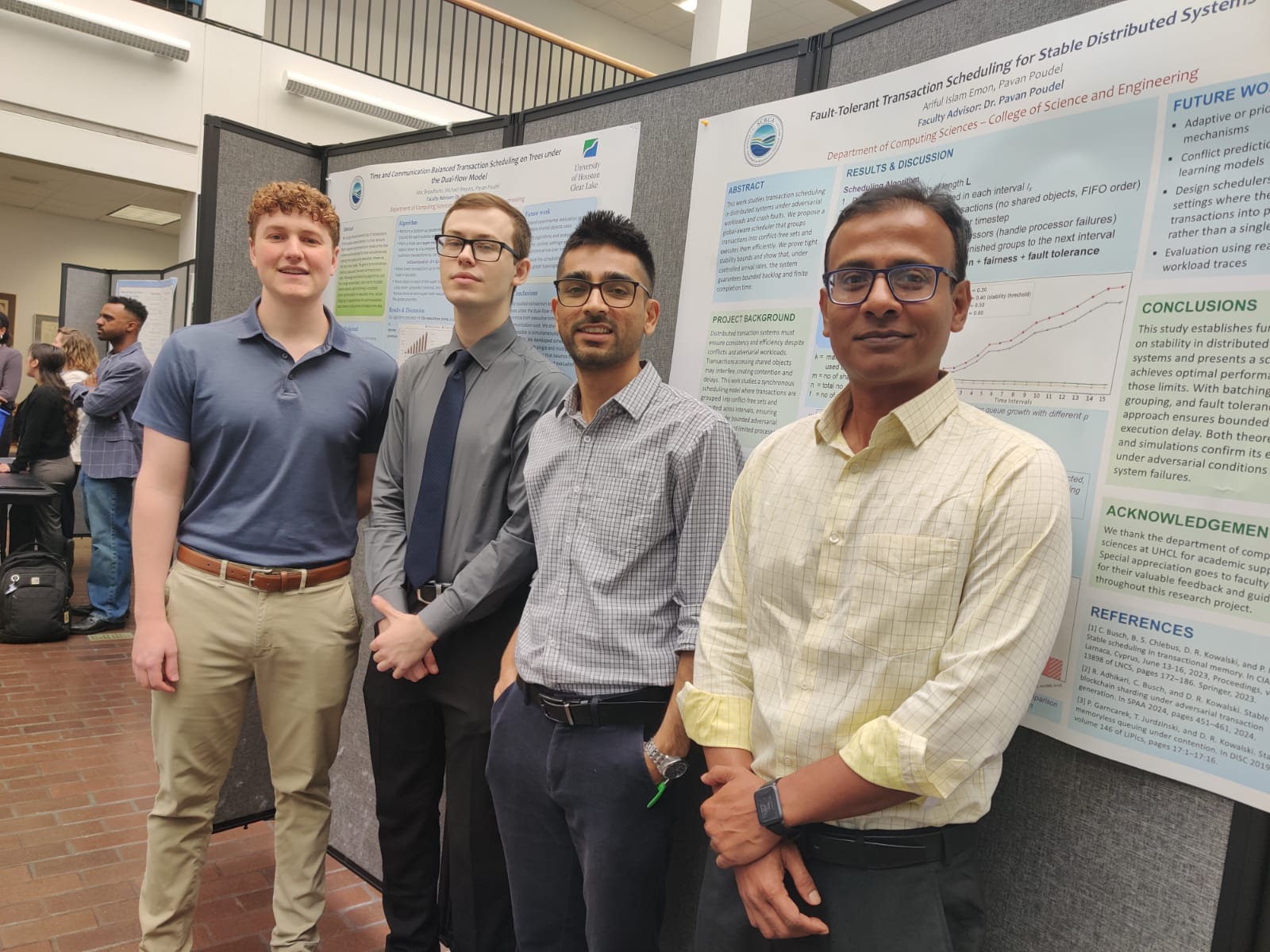
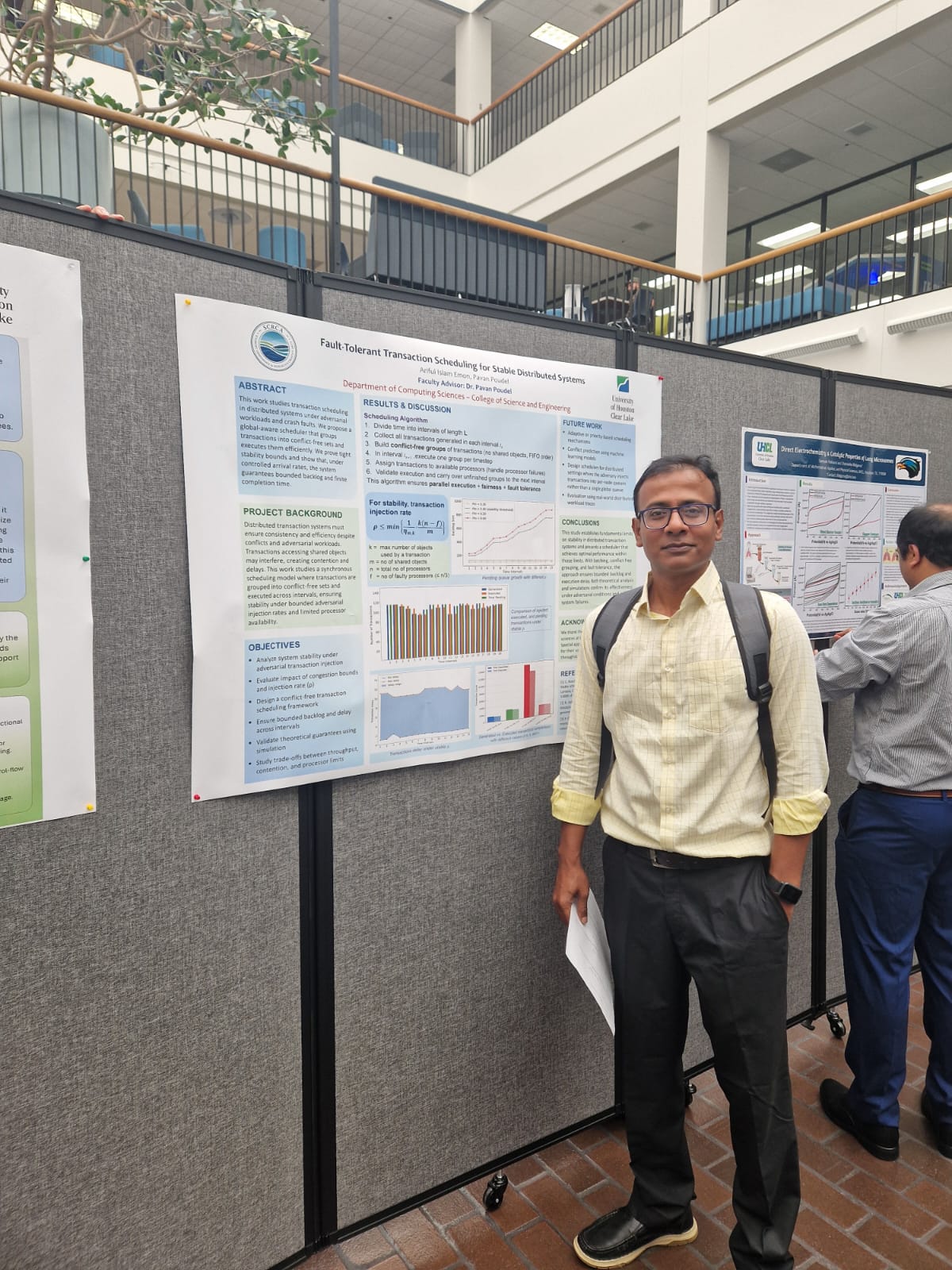
Working on this project involved designing and refining a detailed simulation of conflict-free transaction execution under adversarial conditions. I focused on modeling realistic transaction generation, congestion control, and processor scheduling while preserving strong execution guarantees across intervals. A key contribution was improving the adversarial model to balance object usage, minimize unnecessary conflicts, and prevent early overloads, resulting in more stable and interpretable system behavior. The project required careful reasoning about concurrency, fairness, and worst-case scenarios, as well as iterative debugging to align theoretical constraints with practical implementation. Overall, it strengthened my skills in systems modeling, algorithm design, and experimental validation.
-
- UHCL Poster Presentation 2026
-

- UHCL Poster Presentation 2026
-

- UHCL Poster Presentation 2026
Completed Projects
Optimizing AI Agent
My focus includes integrating support for multiple large language models to a custom AI Agent, allowing the system to leverage different LLMs to improve response quality, flexibility, and robustness. In parallel, I am optimizing prompt engineering strategies to make interactions more efficient and less chat-heavy, while still providing clear, step-by-step guidance. This involves refining prompts, managing context more effectively, and reducing unnecessary follow-up exchanges. The project aims to enhance the overall learning experience by delivering concise, instructional, and user-friendly AI assistance.
Key Technical Highlights
- Designed and implemented a multi-LLM AI system with provider-agnostic architecture and model-specific adapters
- Applied advanced prompt engineering to enforce guided, step-by-step tutoring behavior and prevent solution leakage
- Built context-aware retrieval mechanisms to ground AI responses in assignment-specific instructional data
- Developed semantic memory and session management for assignment-scoped AI conversations
- Integrated natural language understanding with structured user inputs for adaptive tutoring workflows
- Implemented option-based clarification strategies to reduce ambiguity and improve user decision-making
- Engineered controlled AI inference pipelines with token limits, verbosity control, and response constraints
- Designed and managed relational databases for chat history, session tracking, and user interaction logs
- Enabled secure execution and analysis of user-submitted code for real-time error diagnosis
- Performed cross-model evaluation to compare LLM behavior, latency, and instructional quality
- Implemented robust error handling and fallback mechanisms to improve system reliability
Conducted iterative experimentation and evaluation to optimize AI response quality and user experience