Designed and implemented an end-to-end ETL pipeline to capture, process, and analyze employee attendance data from biometric fingerprint devices. The system ensures accurate attendance evaluation across non-standard work cycles in a continuous operations environment.
Key Contributions
- Developed a real-time data ingestion pipeline to extract attendance logs from biometric fingerprint terminals into a structured application database.
- Implemented automated data validation to remove null, invalid, and duplicate records, ensuring high data integrity for downstream processing.
- Engineered transformation logic to map attendance events to employee rosters and compute attendance status (on-time, late, extremely late, absent).
- Designed time-window inference logic to correctly determine employee working days in a 24×7 operational model, supporting shifts that span across calendar days.
- Built rule-based attendance classification aligned with departmental scheduling policies.
- Enabled automated report generation for HR and department management to support operational monitoring and workforce compliance.
ETL Process for Employee Attendance Management in a Television Channel HRMS
This ETL (Extract, Transform, Load) process supports the employee attendance module of a Human Resource Management System (HRMS) used by a television broadcasting organization operating on a 24×7 schedule.
Extract
Employee attendance is captured through biometric fingerprint terminals deployed across the organization. Each authentication event is recorded in real time and stored in a temporary repository in raw format. From this raw dataset, the application extracts the required structured fields, including Employee ID, attendance date, attendance time, and terminal identifier.
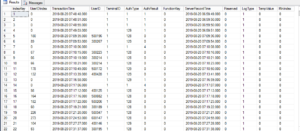
Figure 1: Raw biometric data
During extraction, data quality checks are applied to ensure reliability and consistency. Records containing null values, invalid timestamps, or duplicate entries are identified and filtered. The validated and structured attendance records are then stored in the application database to prepare them for downstream processing.
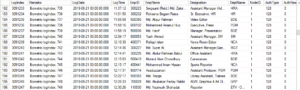
Figure 2: Clean and partially transformed data
Transform
The transformation phase begins by linking attendance records with employee master data and assigned work schedules maintained in the HRMS. Based on predefined departmental rosters, the system evaluates attendance status, categorizing records into operational classifications such as on-time, late, extremely late, or absent.
Given the organization’s continuous 24-hour operations, an employee’s working day is not restricted to the conventional calendar day (12:00 a.m. to 11:59 p.m.). Instead, work cycles may span non-standard intervals, such as 6:00 a.m. to 5:59 a.m. the following day or 10:00 p.m. to 9:59 p.m. the next day. The transformation logic is designed to accurately determine an employee’s effective working day by analyzing attendance timestamps in conjunction with schedule definitions.

Figure 3: Transformed data
In cases where roster data is incomplete or unavailable, the system intelligently infers the working cycle using attendance patterns, ensuring continuity of attendance evaluation. The processed and enriched attendance data, including computed status indicators, is stored in the application database as transformed data.
Load
In the final stage, the HRMS loads the transformed attendance data into reporting and analytics modules. The system generates operational and managerial reports tailored to departmental requirements, supporting workforce monitoring, compliance tracking, and administrative decision-making.
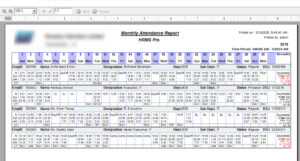
Figure 4: Load transformed data from application database
Through this structured ETL workflow, the HRMS ensures accurate capture, validation, and interpretation of attendance information, enabling reliable workforce management in a continuous broadcasting environment.